A new Consell with a clear aroma of the Carlos Mazón era and a Presidency area with its own stamp. There are two keys to the government that Juanfran Pérez Llorca has created to face the remaining year and a half of the legislature, in which There is hardly a drop compared to the Executive inherited from Mazón and three new additions. The newly appointed president increases two ministries, creates a third vice presidency, changes the spokesperson and, above all, reorganizes the internal structure of the Generalitat, especially the engine room of the Palau.
Pérez Llorca has opted for a soft remodeling of the government and has concentrated the most important movements in the Presidency, as Levante-EMV reported. The popular party thus balances in search of combining the need to turn the page on the dana, not to waste time in the face of the short mandate that remains ahead and to pacify the party internally after a turbulent year and an uncertain future. The new Consell has a male majoritywith six men (plus Pérez Llorca) and five women, while at the territorial level it leans towards Valencia.
Only one councilor from the previous government falls: Ruth Merino. The former head of Hacienda It was a personal bet from Mazón, who signed her after her scare from Ciudadanos on the eve of the last elections, and she ended up leaving the Executive after having avoided several exit pools. The rest continues, with some changes in powers. Among them José Antonio Rovira, who is most trusted by Mazón and who leaves Education to relieve Merino herself. He receives the keys to the box and will be the face of the Consell de Pérez Llorca in the eternal battle for financing.
One of the great novelties is the new second vice presidency and Ministry of the Presidency, newly created and falling to Pepe Díezwho was already with Mazón at the Palau. Of PP pedigree (his father, José Díez Cuquerella, was president of the Provincial Council and his wife, Julia Climent, is a councilor in the Valencia City Council) he has been general director of Strategic Projects this term and was a senior official under Francisco Camps.
Díez will have three regional secretariats in charge: Henar Millerwho was already at the Palau with Francisco Campsas regional secretary of the Presidency; Jacobo Navarro, from Analysis, Studies and Public Policies (a newly created area after being struck down by Mazón) and also close to Camps at the time, and Vicente Ordaz, responsible for Communication and on whom the public discourse of the new Generalitat will depend. This latest appointment opens the management melon. Ordaz was president of the Board of Directors of public television and his departure could be used by Llorca to build a bridge with the left, which was left out of the cast.
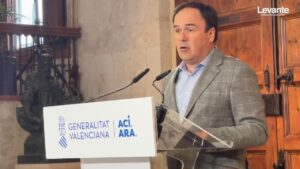
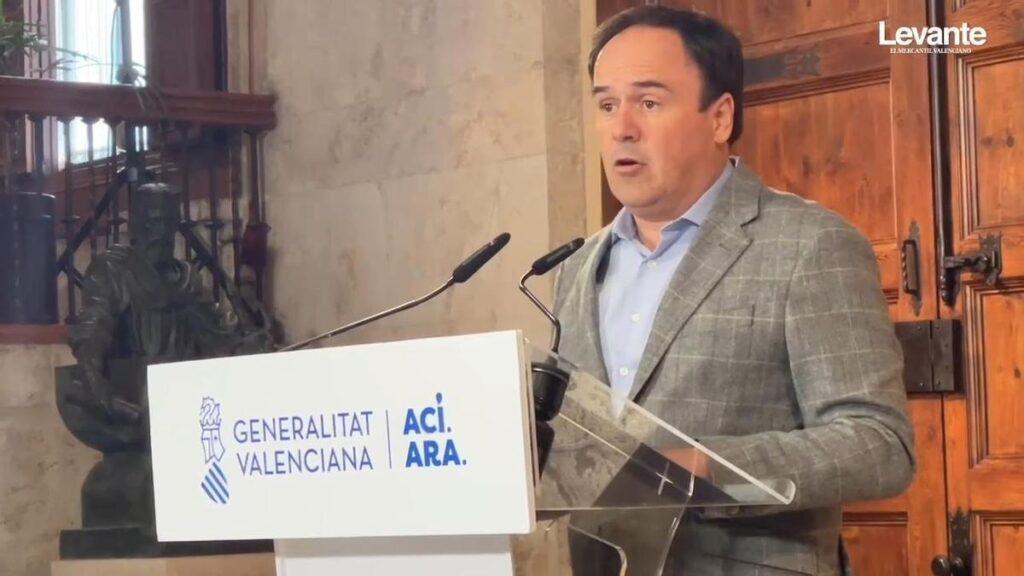
One of the great novelties incorporated by Pérez Llorca is that he takes linguistic policy under his umbrella, previously in Education and which passes to the Presidency. “I will reinforce the use and promotion of Valencian,” said Llorca in his brief speech this morning, who presented himself as a “defender” of the AVL in his investiture speech, moving away from Mazón's era. From those around him, they highlight his commitment to educational freedom and his willingness to build bridges with the Academy chaired by Verònica Cantó, with whom Llorca has already maintained some contact.
Susana Camarero and Vicente Martínez Mus They maintain their rank of vice president. The latter goes from second to third and retains its powers in Environment, Infrastructure and Territory. The novelty in this area is the creation of a new commissioner for creation of a dana commissioner who will be led by Raúl Mérida, of whom the new president values his “dialogue profile.”
Camarero, for her part, loses her spokesperson position after being the voice of the story of 29-O, which falls to Miguel Barrachina, and the responsibilities in Social Services, where the residences are integrated and which is why she has been summoned to testify as a witness by the dana judge. These pass to Elena Albalat, former regional secretary of the Social and Health Service and one of the additions to the new regional Executive. Graduated in Advertising and Public Relations and former councilor in Onda, she will be Minister of Social Services, Family and Children.
However, Camarero retains his specific weight in the new Consell, where he will lead Housing, Employment, Youth and Equality, elements that Llorca placed as “key” in his inauguration speech and that today he has once again presented as “fundamental lines” of his project. According to his surroundings, the head of the Consell wants to bring equality training closer to the youngest, as well as bring housing policies to the forefront.
The third addition is that of Mari Carmen Ortí Ferre, a Valencian teacher with a marked technical profile, who comes to Education and Culture. You will have the challenge of pacifying an educational community on a war footing after two and a half years of tension with the Rovira area.
Added to those mentioned are Juan Carlos Valderrama, Nuria Martínez Sanchis and Marciano Gómez who continue with their functions within the regional Executive as Ministers of Emergency, Justice and Health respectively. Martínez loses the powers in Public Function that return to the Treasury with Rovira and wins Transparency (previously in the Presidency) and Participation. The areas of Gómez and Valderrama do not register any changes.
With barely a year and a half left until the elections, the new Valencian government will take office first thing this Thursday. The objective is to hold the first plenary session of the Executive as soon as possible, according to Palau sources. Pérez Llorca himself has exhibited the pressure imposed by the calendar and has admitted that he wants to “get to work as soon as possible.” “We cannot waste a day,” he said.
Subscribe to continue reading