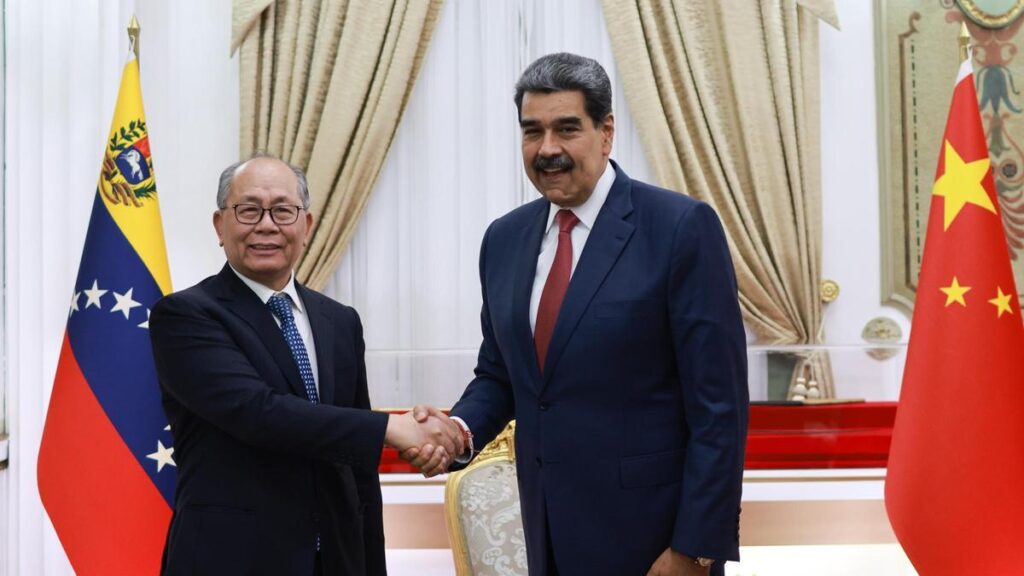
China has called the US attack on Venezuela of “hegemonic act” and has demanded that Washington respect the international law. The statement from the Ministry of Foreign Affairs exudes the belligerence that Chinese diplomacy, naturally measured, reserves for great occasions. Also the timing of the official reaction, well into the night of Saturday, suggests the gravity that Beijing gives to the episode and the urgency to express their opposition. It is likely that Chinese anger was also helped by the fact that the operation came just hours after his representative met with Nicolas Maduro.
“China is deeply shocked and strongly condemns the undisguised use of force by the United States against a sovereign State and its president,” the statement reads. “These hegemonic acts,” it continues, “They seriously violate international law and the sovereignty of Venezuela and threaten peace and security in Latin America and the Caribbean region.” “We call on the United States to comply with international law and the purposes and principles of the UN and stop violating the sovereignty and security of other countries”, he ends.
Chinese diplomacy, in another statement without political evaluations, has asked its citizens that they do not travel to the South American country “in the near future” and has recommended those who are there to take extreme precautions: not to leave home if it is not essential, to stay away from conflict zones and to contact the local police or the Chinese embassy in case of emergency. The institutions, the letter states, “are closely following the evolution of the security situation and have reinforced preventive measures and emergency plans”.
Maduro meeting with Chinese representatives
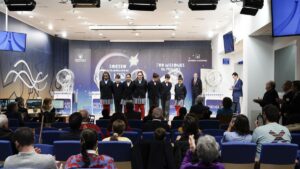
Maduro was smiling in the Miraflores Palace a few hours before being captured with his wife by an elite US military team. His meeting with Qiu Xiaqi, special envoy for Latin American Affairs, was his last public act in freedom. Also participating were the executive vice president, Delcy Rodriguez, and the Chinese ambassador in Caracas, Lan Huin an event abundant in smiles and commitments of friendship. The meeting “ratifies the unbreakable character of the brotherhood between Caracas and Beijing in a geopolitical context marked by resistance to unilateral coercive measures and the search for sovereign development for the peoples of the Global South,” said the Venezuelan Government. Both underlined the “foolproof” strategic energy and political partnership. Qiu was received by Maduro as diplomatic help in his most complicated hours.
Different sources indicate that Qiu was still in Caracas during American bombings. Geopolitical interpretations are always a delicate terrain, and even more so with Trump involved, but it is not difficult to see a message to Beijing in its struggle to extend its influence in Latin America. China and Venezuela are negotiating hundreds of bilateral agreements that will remain a dead letter with a change of regime. Bilateral relations between the two superpowers, which seemed healed after the trade agreements, have already suffered a tremendous blow with the pachydermal arms sale to Taiwan.
China had criticized weeks ago the “matonismo unilateral” de Washington and defended Venezuelan “legitimate rights and interests”. The country is relevant to Beijing because of its geostrategic value in Latin America and oil supply. China absorbed almost 80% of Venezuelan crude oil exports, according to sector experts, in a context of massive international sanctions after the last elections. China has also been generous with credits. They reached 50 billion dollars in the first fifteen years of the millennium, which represents 40% of all Chinese loans to Latin America. In recent years, however, Beijing had reduced the flow of funds and he endeavored to collect the old ones.
Subscribe to continue reading